


Here's a story you know.
You've been paying a SaaS vendor for years. The price crept up. You accepted it because switching is painful, and you had other things to worry about. Then one day you find a better option — better value, better fit — and you start the conversation to leave.
Suddenly, your account executive calls. Warm. Apologetic. Ready to deal.
"We can actually do it for much less. You should have just reached out."
I should have just reached out.
So you were overcharging me — knowingly — and the solution is that I should have asked you to stop? This isn't a negotiation strategy. It's a confession. And it makes me trust you less than I did before you offered to help me. When you ask for time on my calendar to discuss why I am leaving, I am baffled that you think this is how I'd spend my time.
I'm not alone in this. And the vendors doing it should pay attention, because the ground is shifting under their feet in ways they are not taking seriously enough.
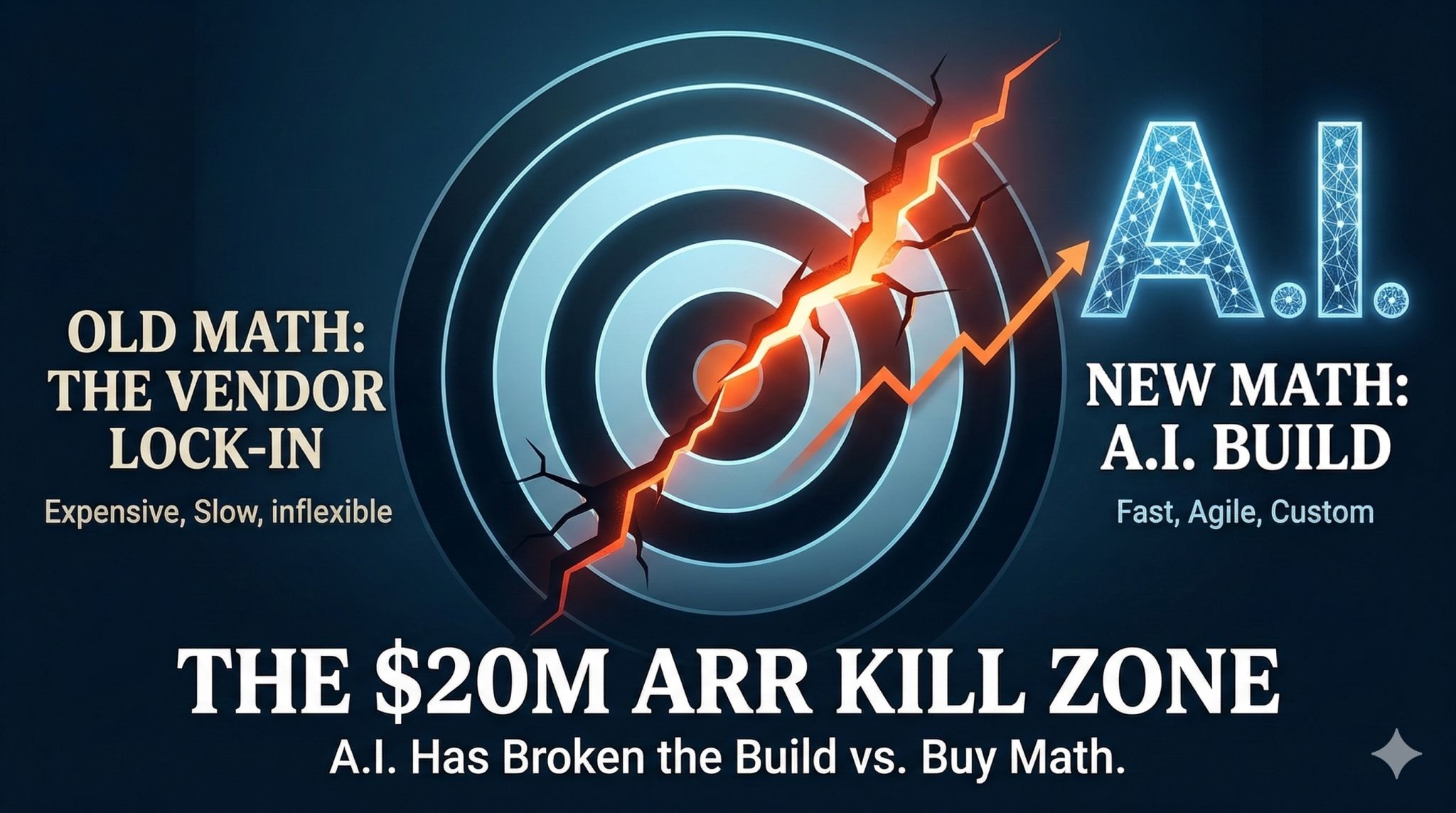
Something remarkable is happening right now. For the first time in the history of enterprise technology, buyers can actually put their hands on software. Not just use it — understand it. AI-assisted development has demystified the black box. People who have never written a line of code are watching functional applications get built in hours. They're getting an education in real time about what software actually costs to create and what it should cost to use.
This is not a small thing. This is the moment the curtain comes down.
We're not all going to build our own enterprise applications. We know that. But we now know enough to recognize when we're being charged for complexity that doesn't exist, for switching costs that were manufactured, for a moat that was mostly made of fog.
That knowledge is going to crater the margins of many SaaS businesses. The ones most at risk are the simpler applications — those with healthy ARRs built on inertia and information asymmetry rather than genuine, irreplaceable value. Some of them won't survive the next five years. Not because they were bad products, but because the thing that made them defensible wasn't the product. It was the confusion.
We see this clearly. And it's the reason we exist.
Our mission is to build software that delivers real, visible, understandable value — tailored to your business, managed by us, and built to keep pace with a world that changes faster every month. But there's something else that matters just as much to us: you own it.
Not a subscription to it. Not a license for it. Not a carefully negotiated right to access it until we decide to reprice it. You own the code. It's portable. It goes where you go. When you invest in software with us, you are investing in yourself — in an asset that belongs to your business and compounds in value over time. That is a fundamentally different proposition than renting someone else's black box indefinitely and hoping the price doesn't double at renewal.
We're not interested in locking you in. We're interested in being so genuinely useful — and so genuinely fair — that leaving never crosses your mind.
That's a different bet. It requires us to actually be good every day, instead of just hard to leave.
Pricing should reflect value. Software should serve the business that uses it. And vendors who've been hiding behind complexity and manufactured dependency should start having a different kind of conversation with their customers.
Before their customers come to them with a resignation letter.


.png)
.png)

.png)